
I should start by telling you who I was before any of this happened, because I think it matters. I'm 58, I've taught third grade for twenty-six years, and I have exactly one hobby that's ever stuck: my garden. Not a fancy one. Tomatoes, roses, a stubborn patch of peonies my mother gave me cuttings of before she passed. My husband Dave used to joke that he could set his watch by me — up at 6:45, coffee in hand, knees in the dirt by 7. Weekends, summer evenings, the first warm Saturday in March. That garden was where I went to think, to grieve, to celebrate. It was mine.
So when I tell you that arthritis crept in and took that away from me, piece by piece, I need you to understand it wasn't just physical. It felt like losing a friend.
It didn't happen overnight, and honestly, that's part of why it took me so long to do anything about it. If I'd woken up one day and suddenly couldn't move, I think I would have panicked and gone straight to a specialist. Instead, it was so gradual that I kept explaining it away.
First it was just my knees, and only after I'd been kneeling a long time — twenty, thirty minutes in the flower bed. I'd stand up and there'd be that stiff, swollen feeling, like the joint needed a second to remember how to bend. I told myself it was just middle age. Everyone's knees complain a little at 55, right?
Then, over the following year, it moved into my hands. This is the part that really scared me, because gardening is one thing — I could always kneel less, buy a cushion, take breaks. But my hands are how I do everything. Grade papers. Braid my granddaughter's hair. Open the pickle jar without asking Dave for help, which, if you knew how stubborn I am, you'd know mattered more than it should have.
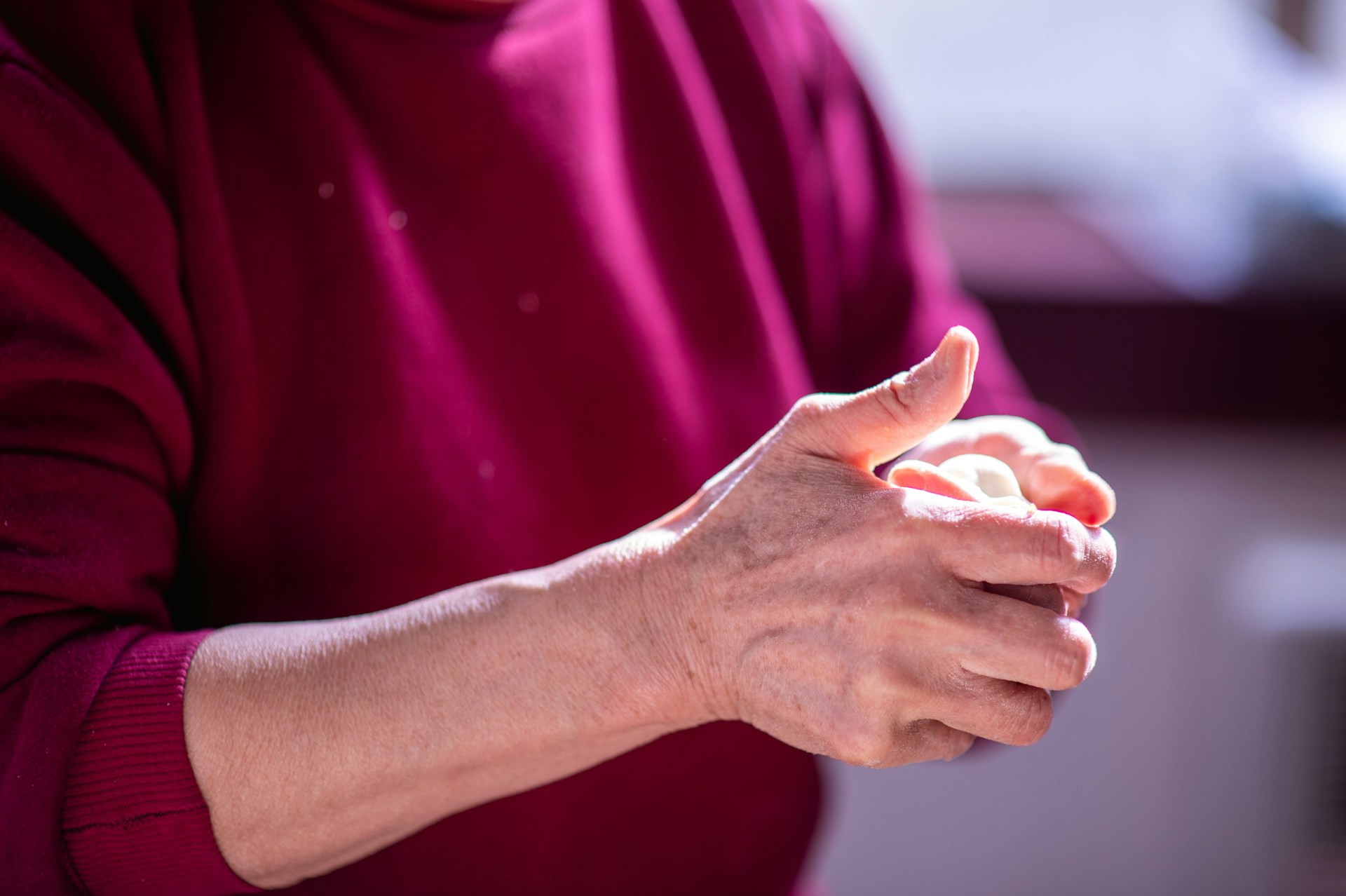
Some mornings I'd wake up and my fingers would feel thick and tight, almost like I'd slept wearing gloves. It would take twenty minutes or more of slowly flexing them under warm water before they felt like mine again. There were days I couldn't get my wedding ring off, and days I couldn't get it back on.
I finally went to see my doctor, Dr. Feldman, after about a year and a half of this. I'd been putting it off partly out of denial and partly, I'll admit, out of fear of what she'd say. She examined my hands and knees, asked a lot of questions about when it was worse (mornings, damp weather, after long stretches of activity), ordered some bloodwork and X-rays to rule out other things, and eventually used the word I'd been avoiding: osteoarthritis. The everyday, wear-and-tear kind that shows up as cartilage naturally thins with years of use, not the autoimmune kind, which was at least some relief to hear.

She told me something that stuck with me: that more than 50 million adults in the U.S. deal with some form of arthritis or chronic joint pain, and that for most people, it's not one single fix — it's a handful of smaller adjustments working together over time.
For about a year, I basically just tried to push through it. I want to walk through what that looked like, because it's the part that made me eventually go looking for something more.
None of it was wrong. It just wasn't a strategy. It was reacting to bad days instead of trying to have fewer of them.
The turning point was a Sunday dinner with my daughter, Kate, a physical therapist who's spent eight years working with older adults recovering from joint injuries. I was half-joking about not being able to open a jar of her homemade sauce, and she got quiet in that way she does when she's about to say something as my kid instead of small talk.
She told me she saw this pattern constantly with her patients: people treating joint pain purely as something to numb or push through, rather than as something connected to how they moved, what they ate, and whether their body had the raw materials it needed to maintain healthy cartilage and connective tissue in the first place.
That sent me down a rabbit hole. Over the next several weeks I read more about joint health, cartilage, and inflammation than I'd read in my entire adult life combined. A few things kept coming up, from multiple independent sources:
None of this promised a cure. But it reframed the question for me — from "how do I numb this" to "what does my body actually need long-term, and am I giving it that?"
I was resistant to the idea of a joint supplement for a long time, because the category is genuinely full of noise. I spent an embarrassing number of evenings comparing labels, and most of what I found fell into one of two buckets — wildly overhyped, or so vague about actual ingredient amounts that I couldn't tell if I'd be getting anything meaningful at all.
What I was actually looking for, once I'd done my reading:
This is what led me to a formula called Mobility RM. I didn't find it through some dramatic moment — I found it doing exactly the comparison-shopping I just described, and it was the first one where the ingredient panel actually lined up, dose for dose, with what I'd read in the research rather than reading like a marketing afterthought. That mattered more to me than any headline on the box. I ran it by Dr. Feldman before I started, and she confirmed it wouldn't conflict with anything else I was taking.
I started taking Mobility RM alongside the movement and lifestyle changes Kate had walked me through — gentle warm-up stretches before gardening instead of diving in cold, being more mindful about ultra-processed foods, and keeping my hands and knees moving in small ways throughout the day rather than resting them completely on bad days.
I'm not going to tell you I felt transformed within a week — I'd be suspicious of anyone who tells you that was their experience. What I noticed instead, over roughly two to three months, was a gradual shift in the texture of my days:
Those might sound like small things to someone who hasn't lived with this. They didn't feel small to me.

I want to close this out honestly. My arthritis isn't "cured." It isn't going anywhere. Cartilage worn down over fifty-eight years of living doesn't regenerate because you found the right bottle — I'd tell you to run from anyone who says otherwise. What's changed is that I feel like I have a real say in how my next decade of mornings feels, instead of accepting a slow decline as inevitable.
Between moving smarter instead of less, paying attention to what I eat, and being intentional about giving my joints the specific building blocks the research pointed me toward — with Mobility RM being the piece that tied that last part together — I got back something I didn't expect: quiet, unremarkable mornings. Coffee held in both hands without wincing. Knees back in the dirt by my peonies.
If you're in the stiff-mornings, aching-hands place I was in two years ago: don't wait as long as I did, talk to your own doctor before changing anything, and if you look into a joint-support formula, actually read the label instead of the headline.
My garden's still a mess most weeks, if I'm being honest. But I'm back in it — knees in the dirt, hands in the soil, coffee mug held with both hands, the way it used to be. For me, that's the whole story.